
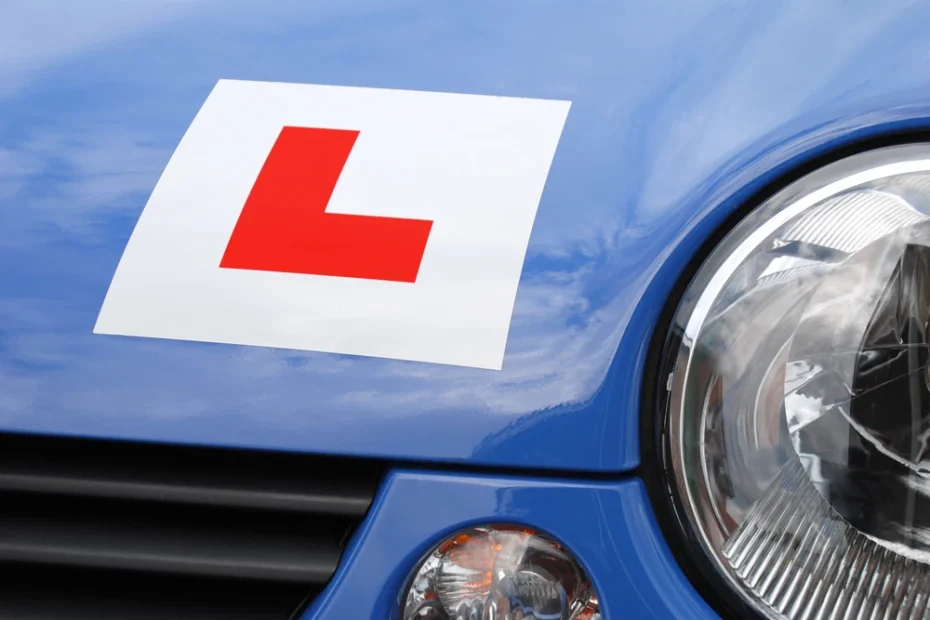
I’ve been learning to drive! Better very-late-indeed than never, perhaps…? And since the Yi – along with a wise driving instructor and generous husband – has been instrumental in making this possible, I thought I’d write about it here.
Why so late? Well… I started lessons at 17 like everyone else at my school, was very bad at it – unlike, it seemed, everyone else at school – ran out of money for lessons and lost interest. One of the joys of being 17 is that you can give up the things you’re bad at: no more maths, and hallelujah, no more netball! – and no more driving, either.
Eventually, I had another go at learning with my husband David, was still very bad at it, and lost motivation again. A combination of kind people and cycle-accessible shops meant I didn’t exactly need to drive anyway.
Over the past few years, since we moved into the middle of nowhere, I’ve increasingly felt it would be useful to be able to drive, and kept writing it down on my plan for the year as something I really ought to learn.
I did that for a few successive years. Only by now I had got thoroughly nervous about driving at all: even the idea of sitting in the driving seat with the engine off was disconcerting. My subconscious did not help matters by settling on a favourite recurring anxiety dream in which I was driving and couldn’t reach the brake pedal to stop the car.
Then one day I was freewheeling downhill into town on my bike when I realised there was a car behind me, and it must have been stuck there for some time. The driver was holding so far back I hadn’t even heard the engine. I pulled over at last, she passed, and called through her window with a huge smile, ‘You were having fun!’ Not the reaction any cyclist would expect.
And… I noticed this was a driving instructor’s car. Huh. I paused to note down the name and carried on to the market… where I found myself just in front of her in the queue at the vegetable stall. And just in front of me was someone whose daughters had both passed with her. We chatted about nervous older learners.
I may be a little slow on the uptake, but I can recognise a synchronicity when it slaps me round the face repeatedly with a wet fish…
Advice for getting started, 17.5 to 51
…and it was definitely time for me to get some lessons and start learning. I could go with Sarah, the instructor with the lovely, kind attitude to oblivious cyclists, or I could make this more of a research project and shop around to compare rates and ratings. (Or maybe I could just hide under the sofa?)
I asked for general advice for getting started, and cast Hexagram 17, Following, changing at line 5 to 51, Shock:
Hexagram 51 I could recognise. I’ve found as relating hexagram it doesn’t necessarily describe a single Shock, but more a general feeling of deep insecurity, something very like that tremulous state I was in as soon as I went near the driving seat. Also, the experience I had in the first few lessons that the car did things – like stalling, or travelling in unexpected directions – of its own volition was very 51-ish.
And there was also the need to wake up, pay attention and get going. Note from my journal just before I cast this one: ‘The universe could not send me more signals that it´s time to do this short of dropping a car on my head.’
Hexagram 17, Following, is the one I associate most closely with synchronicity. (I think someone in the I Ching Community once asked, ‘What is synchronicity?’ and cast 17.) Events flow; one thing follows another; they lead to where you are meant to be.
In the paired hexagram, 18, Corruption, events flow, one thing follows another, and they lead to a nasty sticky mess: you have to examine where you are and how you got there, analyse the symptoms and diagnose the cause, dig under the surface, do the work, create a fresh start. In Hexagram 17 – which is 18’s opposite/complementary hexagram as well as its inverse pair – none of that is necessary:
‘Following has no causes. Corruption, and then order.’
‘No causes’: the ‘acausal connecting principle’ calls for a different response. Go with it where it leads. ‘Not a mistake,’ says the Oracle.
And incidentally, Sarah had shown up following me quietly down the hill, and then behind me in the queue. It almost seemed like someone was trying to tell me something.
So… now was not the time to start a research project to find the right driving instructor; it was time to book a trial lesson.
‘True and confident in excellence.
Good fortune.’
My first thought was that this must be about Sarah’s professionalism, and this was confirmed through my first few lessons. She’s a particularly skilled teacher who proved exceptionally good at observing and managing my state of nerves. Somehow I went from being in a state of fear and trembling just from sitting in the driver’s seat with the engine off all the way to the extraordinary thought, ‘I can drive’.
How to pass first time? 40uc
There’s some way to go, of course, from ‘I can drive’ to being able to pass a driving test. As the test date loomed, I asked, ‘How to pass first time?’
(Aside: actually booking a driving test in the UK at the moment is a feat in itself. If you can find a slot at all, it may well be at the other end of the country in 6 months’ time. Fail, and you have to book another one. This – of course – adds immensely to the pressure to pass.)
How to pass first time? Hexagram 40, Release, with no changing lines.
I so often experience unchanging readings as a kindness from Yi, offered to me when I lack the mental bandwidth to deal with anything more. This was certainly one of those readings.
Hexagram 40 means untying, loosening, releasing tension, and all this made immediate sense. Breathe out, untie the knots in your shoulders, relax your grip on the steering wheel. (Sarah had told me I was allowed to breathe when driving, but this felt somehow less plausible when practising with David.)
Also, that Oracle text is remarkably good advice for emerging at tricky junctions:
‘Release. The southwest is fruitful.
With no place to go,
To turn round and come back is good fortune.
With a direction to go,
Daybreak, good fortune.’
Well, perhaps not ‘turn round and come back’ – tempting, but not generally feasible – but at least ‘With no gap to pull out into, stay put and never mind the car behind; with a gap, get a wiggle on.’
The trigram picture of 40 – water inside, thunder outside – reminds me of the flight of an arrow, or a leaping cat: direct forward motion launched from a base not rigidly immobile, but fluid. This is a help at junctions, too – an antidote to the tendency to stare fixedly in one direction.
From my journal:
“A thought: 40 is how I feel leading a ´cello section. Fully alert, poised to respond to anything, absolutely connected, absolutely relaxed. The inner fluidity of water ready to move with thunder in any direction.
If I can get into the driving seat and feel like it is chair 1 of a section, relax into it as I would that…”
(I couldn’t, and still can’t, but this is a useful part of the reading for me because it’s a complete mental and physical state I’m wholly familiar with, easy to recall – a kind of mental bookmark.)
And there was some handy advice for dealing with (not dwelling on) mistakes:
‘Thunder and rain do their work. Release.
A noble one pardons transgressions and forgives crimes.’
When I shared this reading with my Reading for Others class, a wise student suggested, very politely and tentatively, that maybe I could Release this idea of having to pass first time. She had a point…
(More in my next post!)