Skip to content

64

arrows ready in quiver

Release the arrows

This entry is part 7 of 9 in the series Two-line relationships

Archery in Hexagram 40 Hexagram 40 is Release: its core theme, from the simple decision of the Oracle to the clear air after the storm of the Image, is the release of tension. That might remind you of archery, which is a special, intentional kind of tension-release: deliberately drawing the bow,… Read more »Release the arrows

Hexagram 64: Not Yet Across

Its name and nature At the very end of the Yijing comes the hexagram called Not Yet Across – the embodiment of incompletion and imperfection, an ellipsis in hexagram form. It’s a very large-scale, oracle-sized joke about our expectations of tidiness and order. The Chinese name has two characters: 未濟,… Read more »Hexagram 64: Not Yet Across

ancient character jie

Borders and boundaries

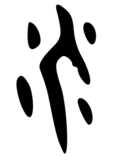
What is Jie 介 ? The character jie 介 occurs three times in the Yi: 16.2 ‘Boundaries of stone,Not for a whole day.Constancy, good fortune.’ 35.2 ‘Now advancing, now apprehensive.Constancy, good fortune.Accepting this armour blessing from your ancestral mother.’ 58.4 ‘Negotiating opening, not yet at rest.Containing the affliction brings rejoicing.’ As… Read more »Borders and boundaries

The noble one’s story

Where you find the noble one We mostly come across the junzi, the ‘noble one’, in the Image Wing of the Yi. But he also features in many oracles and lines of the original text. Here’s the whole list: 1.3, 2.0, 3.3, 9.6, 12.0, 13.0, 15.0, 15.1, 15.3, 20.1, 20.5,… Read more »The noble one’s story

Marriage and Mandate

As I’ve probably mentioned from time to time, I’m working on an enlarged and improved version of the Words of Change Yijing glossary, to be included as part of the upcoming journal software. This gives me the perfect excuse for lots of completely engrossing research and exploration into Yi, while… Read more »Marriage and Mandate

Two-line changes

This entry is part 4 of 9 in the series Two-line relationships

If you’ve been working with Yi for a while, you’re probably familiar with the idea of looking at the hexagram each individual moving line would change to on its own, to give you a better context to understand its meaning. You might have heard them referred to as zhi gua,… Read more »Two-line changes

Getting written

There’s something about writing on the Yijing – it’s not like other books, that just sit there mutely and allow themselves to be translated. I think people who’ve worked through the hexagram-by-hexagram threads over the years have had similar experiences, as the line of the day just happens to show… Read more »Getting written