Skip to content

17

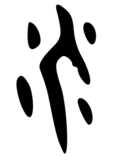
ancient character jie

Borders and boundaries

What is Jie 介 ? The character jie 介 occurs three times in the Yi: 16.2 ‘Boundaries of stone,Not for a whole day.Constancy, good fortune.’ 35.2 ‘Now advancing, now apprehensive.Constancy, good fortune.Accepting this armour blessing from your ancestral mother.’ 58.4 ‘Negotiating opening, not yet at rest.Containing the affliction brings rejoicing.’ As… Read more »Borders and boundaries

lake ripples

Drums in the lake

Integrating trigram imagery into a full reading is sometimes tricky: we don’t, after all, know what the trigrams represented to the people who first wrote the book. So attempting to justify text in terms of trigrams can get one tied up in all sorts of over-elaborate knots. However… those original… Read more »Drums in the lake

Yuan heng li zhen

Hexagram 1 says yuan heng li zhen – from the source, creating success, constancy bears fruit. Hexagram 2 says yuan heng li pinma zhi zhen – from the source, creating success, a mare’s constancy bears fruit The remaining hexagrams can be seen as ‘children’ of these two – 62 ways of blending… Read more »Yuan heng li zhen

When Yi is neutral

A couple of months ago I wrote about ‘Essentials for Yijing readings‘ and included that old favourite hobby horse of mine: the commentary is not the answer, along with some examples of commentary – Wilhelm’s, Karcher’s and mine – that was decidedly not what the oracle said. All three examples I came up with were from… Read more »When Yi is neutral

A line pathway

I’m sure I must have mentioned these before, so let me start with a quick recap before I get to something I just noticed about 57.5… A ‘line pathway’ is my name for what LiSe calls ‘line squares’ and Stephen Karcher calls ‘crossline omens’. (LiSe and Stephen are the ones… Read more »A line pathway

Turning points

Someone, some day, really is going to have to write a huge Yi book that not only describes individual moving lines with their zhi gua in mind – for example, writing about 27.6 with 24 in mind – but also describes groups of moving lines with their zhi gua in mind.… Read more »Turning points