Skip to content

cwi

Ji Already

Already

It can be interesting to look at how the names of the hexagrams are used in the text of the Yijing – I mean, besides in the eponymous hexagram. This happens quite a bit, and while sometimes it’s obviously just normal usage of a common word (like you 有, ‘having’… Read more »Already
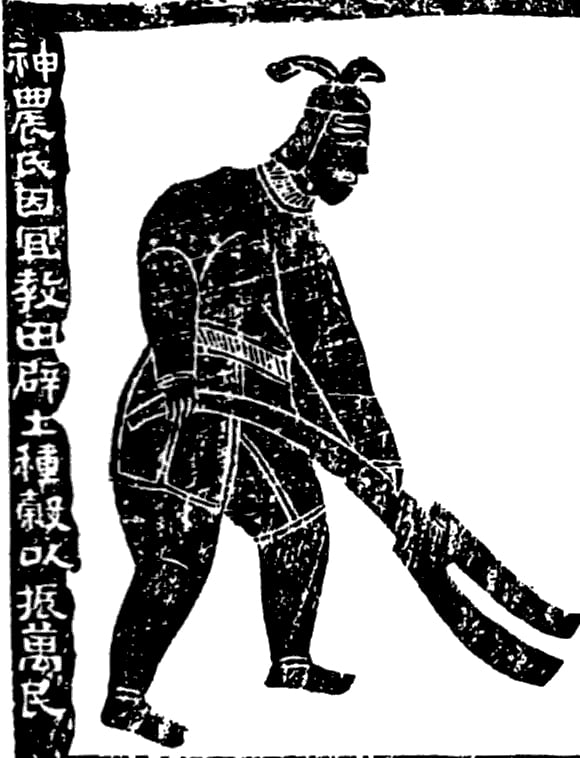
Shennong, the Divine Husbandsman

Hexagrams as culture heroes

This entry is part 4 of 5 in the series The Wings

Here’s Wikipedia’s definition of a ‘culture hero’: A culture hero is a mythological hero specific to some group (cultural, ethnic, religious, etc.) who changes the world through invention or discovery. Chinese mythology seems to be especially full of these: people who are recognised as heroic because they invented millet farming,… Read more »Hexagrams as culture heroes

paintbrushes

The genius of the Daxiang (part 1)

This entry is part 3 of 5 in the series The Wings

Introducing the Image Sometimes we explain things to ourselves by comparing and contrasting – like the Zagua. Sometimes we tell stories, like the Xugua (Sequence of Hexagrams). And often, we paint mental pictures. The Yi is overflowing with pictures, of course – not least the ones created by its component… Read more »The genius of the Daxiang (part 1)

Rain on a window

Rain

The Yijing mentions rain several times – in Hexagram 9, and then in 38.6, 43.3, 50.3 and 62.5. What does it represent? Wilhelm, writing about 50.3, has a succinct answer: ‘The fall of rain symbolizes here, as in other instances, release of tension.’ Wilhelm is (here, as in other instances)… Read more »Rain

rough mountain track

Puzzling over 54, line 1

It’s a not-unfamiliar experience with readings: the oracle text of the hexagram says one thing, and then a moving line says something quite different. You probably know the basic principle: the moving line text takes precedence. It’s the ‘You Are Here’ sign to the hexagram’s overall scene-setting. Still, it’s worth… Read more »Puzzling over 54, line 1

ancient wall at Machu Picchu

Foundations: trusting the oracle

When I teach the Yijing Foundations Class – which I’ll be doing again in September – I concentrate on the few really necessary basics for good readings: ways to relate to all the imagery (words and trigrams) understanding the structure of a reading (primary, relating, lines positions)and also knowing what… Read more »Foundations: trusting the oracle