
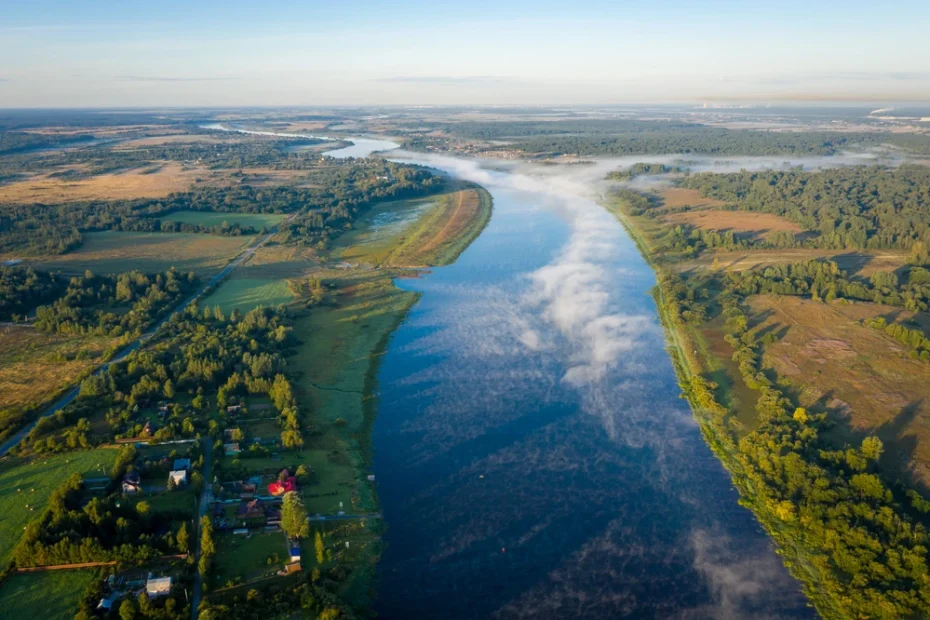
(This is, aptly enough, going to be a series of posts – though not an endless one…)
Introducing ‘ever-flowing constancy’
Zhen, ‘constancy’, is the fifth word of the whole Yijing:
乾元亨利貞
qian, yuan heng li zhen
‘Creative force, from-the-source creating-success, harvest in constancy.’
Or for those translators, like Stephen Field, who are trying to reconstruct the original, Bronze Age meaning:
‘The Vigorous. Your primary plea is heard. A good omen.’
Zhen, constancy, is the quality that will carry the inspiration through into reality – or the omen you’ve been given to carry with you. And from the outset, it’s clear there is more than one kind of zhen: the mare’s constancy (or an omen favourable for a mare) in the oracle of Hexagram 2, the contrast of small and great constancy in 3.5.
And in the seventh line text of Hexagram 2, the one consulted if all six of its lines are changing, 利永貞 : ‘harvest in ever-flowing constancy’. This kind of constancy shows up again in the oracle of Hexagram 8, and then in 22.3, 42.2, 45.5, 52.1 and 62.4. So… what is this? Isn’t it something of a tautology – isn’t all constancy ‘ever-flowing’, or perpetual, or enduring?
‘Ever-flowing’?
The word I’ve rather awkwardly translated as ‘ever-flowing’ is yong: 永 .
You can see from the ancient character where I got the idea:
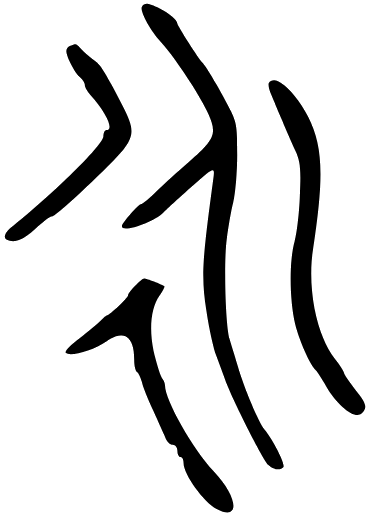
It shows a human figure swimming in the river, wholly immersed in the current – and indeed, with an extra ‘water’ radical added, it does mean ‘swim’. The Shuowen, the first Chinese dictionary, said it ‘shows the perpetual flow of water in its underground courses’. (I wonder why they thought of it as underground – the waters that flow under all the world.)
But its core meaning is simply perpetual, everlasting, eternal. In its earliest usage, it described something that continued from generation to generation, or the continuing protection of heaven that promises a long life. What continues better than running water?
Yijing translators read it simply: ‘lasting perseverance’ for Wilhelm/Baynes, ‘practice constancy perpetually’ for Lynn, ‘forever steadfast’ for Minford (book 1), ‘enduring persistence’ for Bradford Hatcher. Or for the Bronze Age version – ‘beneficial divination for the long term’ (Redmond), ‘an omen of favor in the long term’ (Field), ‘long term augury’ (Rutt)… and so on.
On the face of it, the ‘reconstructionist’ version rather hollows out the meaning, turning it from a way of living into a simple prediction. (And in the process, making the word zhen quite redundant: we’re consulting an oracle, so not likely to forget that this is an augury…) But I think you can see how the two meanings, ‘lasting divination’ and ‘everlasting constancy’, blend together. If the divination you’re given is for the long term, then it’s something you can count on, and whatever idea you were bringing to the oracle is worth persevering in.
One at a time…
We can learn more about the idea of ‘ever-flowing constancy’ by diving into each instance of it. What’s special about this kind of constancy?
Introduction: 2.7
Its first appearance is pretty special: the exceptional reading of Hexagram 2, Earth, changing at every line to Hexagram 1. If you’re consulting with yarrow stalks or something with the same probabilities, this is the least likely reading in the book – and I haven’t received it yet.
I wrote about it once, years ago, as earth revealing heaven: the place where all the inspiration of hexagram 1 can shine through and activate every grain of earth’s realising power.
Looking at the two hexagrams just as I might for any other zhi gua relationship, leaning towards Hexagram 1 seems to emphasise how the noble one of Earth ‘has somewhere to go’ – is beginning the noble one’s journey through the Yijing, searching for a place to be of service. And the journey will continue, powered by Hexagram 1’s ceaseless creativity:
‘The heavens move ceaselessly.
A noble one in his own strength does not pause.’
Earth meets life force, and does not pause; life just keeps unfolding. (As any gardener will tell you: the weeds won’t take a week off just because you do.)
What could this be in readings? As you can imagine, it’s not easy to find examples to learn from – but the I Ching Community has two. The first seems to encourage a renewal of the querent’s original commitment; the second, embracing the new. Looking at the two together, I think it’s not about old or new, but about something you know, deeply, when you come down to it.
Ever-flowing constancy here would mean paying acute and tireless attention to that guidance: not following impulse, but what is true. Hexagram 1 especially, with its lapidary yuan heng li zhen, comes with an inner sense of something that is meant to be. This is true; this should be real.
Or as Wilhelm puts it:
‘By holding fast to what is right, it gains the power of enduring.’
The source: Hexagram 8
Ever-flowing constancy’s next appearance is not in a line text, but the Oracle of Hexagram 8 – Seeking Union, Belonging.
‘Seeking union, good fortune.
At the origin of oracle consultation,
From the source, ever-flowing constancy.
No mistake.
Realms not at peace are coming.
For the latecomer, pitfall.’
What happens here?
I’m persuaded that this hexagram is alluding to the story of Yu the Great: how after his labours to conquer the floods, he called a gathering of lords and spirits to found a new community. And Fang Feng, famously, came late to the meeting (the word translated as ‘realms’ is actually his name) and was executed.
This is the origin of oracle consultation (I’ve shared musings about this before), so naturally constancy flows from here. It comes from the moment in divination when you recognise its imagery, feel what belongs and how it’s a good fit. And it also comes from the sense of community, feeling how you belong and are a good fit. (I think the search for human belonging is ‘at the origin of oracle consultation’ for most of us!)
Why would we need ever flowing constancy here?
It certainly fits well with the wateriness of it all: Yu’s story, and how it’s visible in the trigrams of this part of the book. But there’s more to it than that, I think.
“Water over the Earth: it is an image of the big river flooding the earth, devastating everyone living in its range. The only way to fight this kind of danger is to be like water, to go on and on, no matter what the cost or how long it takes. Earth also means ‘a mass’, a large group, which may be the only way to summon enough strength. When a person with an unstoppable power like water leads a group, big enterprises can be completed.”
“To be like water, to go on and on, no matter what the cost or how long it takes.” That was Yu’s own story – years of hard, muddy toil – so perhaps the same quality is still needed here.
The only problem I have with this is that it sounds quite grim, and more like Hexagram 7, the Army, than 8. The Zagua, contrasting the two, says,
‘Seeking Union means delight; the Army means grieving.’
Delight is the guiding principle of Seeking Union: it might be work, but it has to feel right. Once it does, once you have that moment of recognition (of what a reading is saying, or that you have found your place), then it is no mistake to keep going in that commitment – and it never can be, no matter where it leads.
And this comes through in the inner logic of the oracle text, from ‘good fortune’ to ‘pitfall’:
‘Seeking union, good fortune.
This feels right!
‘At the origin of oracle consultation,
From the source, ever-flowing constancy.
No mistake.
I can flow on endlessly from this divination – this knowing – and avoid mistake. And here is the mistake I’ll avoid:
Realms not at peace are coming.
For the latecomer, pitfall.’
‘On second thoughts… here are lots of new people / here is a whole lot of new information… and now I’m not sure how I feel. Maybe it isn’t right after all?’
Seeking Union actually contains the danger of endless indecision: if I’m always seeking what feels right, I might neglect what I know to be right. Ever-flowing constancy is how to avoid that disastrous hesitancy by staying true to the original knowing: not just being constant until circumstances change, but without end, always renewing the connection.
(22.3, 42.2, 45.5, 52.1 and 62.4 still to come…)
very inspiring. thank you Hilary
Thanks for putting this together. The examples are what make it useful.
The reading of constancy as something that keeps moving rather than something that stays fixed is the part I keep coming back to. Unrelated but practical: I illustrate my own notes on these readings, and building the images with an AI image generator has made it much easier to keep a consistent visual language across a long series.