




Clarity,
Office 17622,
PO Box 6945,
London.
W1A 6US
United Kingdom
F
Freedda
Guest
Line 1.4 reads:
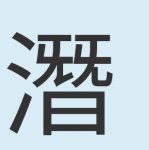
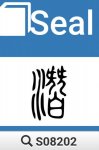
I noticed that the word used here for the abyss or the deep is Yuan1 (gulf, chasm, depth, deep), and it is only used this one time in the Yi. This is in contrast to Kan3, which also means chasm, or depth (and also risk, danger, pit, hole, etc.) and which is the name of both Hexagram 29 and the trigram Water. (Kan is used a few times, but only in the oracle text and line text of 29.)
I'm wondering, is there a particular reason or significance why Yuan was used here in this line, instead of Kan? And is this difference important or not?
Best, D.
Someone dancing in the abyss. No mistake. ... or ...
Probably leaping from an abyss. No fault.... or ...
Somehow to dance across the deep. With no mistakes.
(Different interpretations have the dance happening in, across, above, or leaping from the abyss.)
Probably leaping from an abyss. No fault.... or ...
Somehow to dance across the deep. With no mistakes.
(Different interpretations have the dance happening in, across, above, or leaping from the abyss.)
I noticed that the word used here for the abyss or the deep is Yuan1 (gulf, chasm, depth, deep), and it is only used this one time in the Yi. This is in contrast to Kan3, which also means chasm, or depth (and also risk, danger, pit, hole, etc.) and which is the name of both Hexagram 29 and the trigram Water. (Kan is used a few times, but only in the oracle text and line text of 29.)
I'm wondering, is there a particular reason or significance why Yuan was used here in this line, instead of Kan? And is this difference important or not?
Best, D.
Last edited: